What is Azure AD B2C?
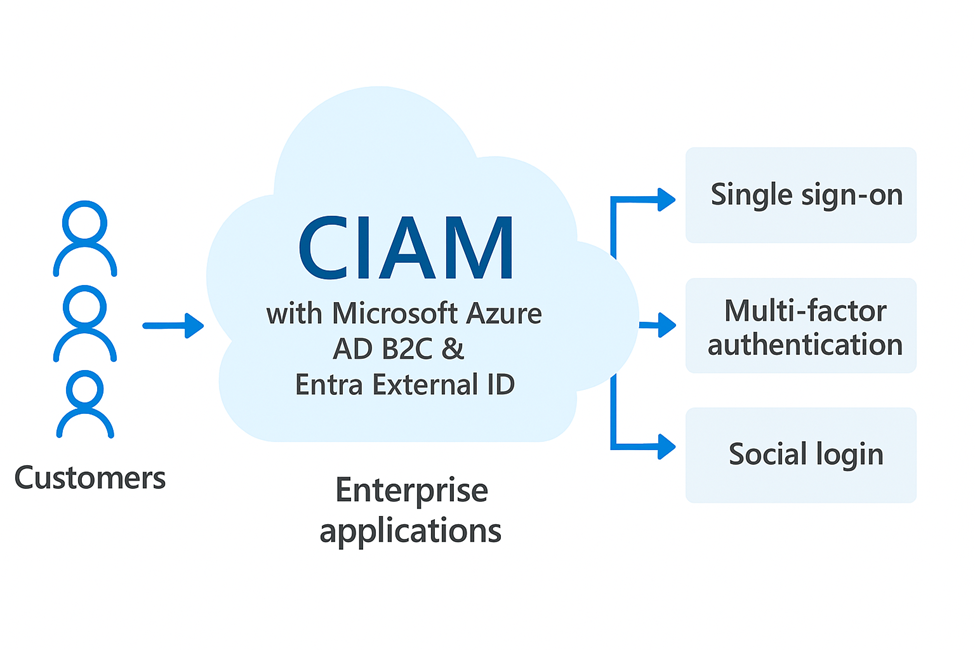
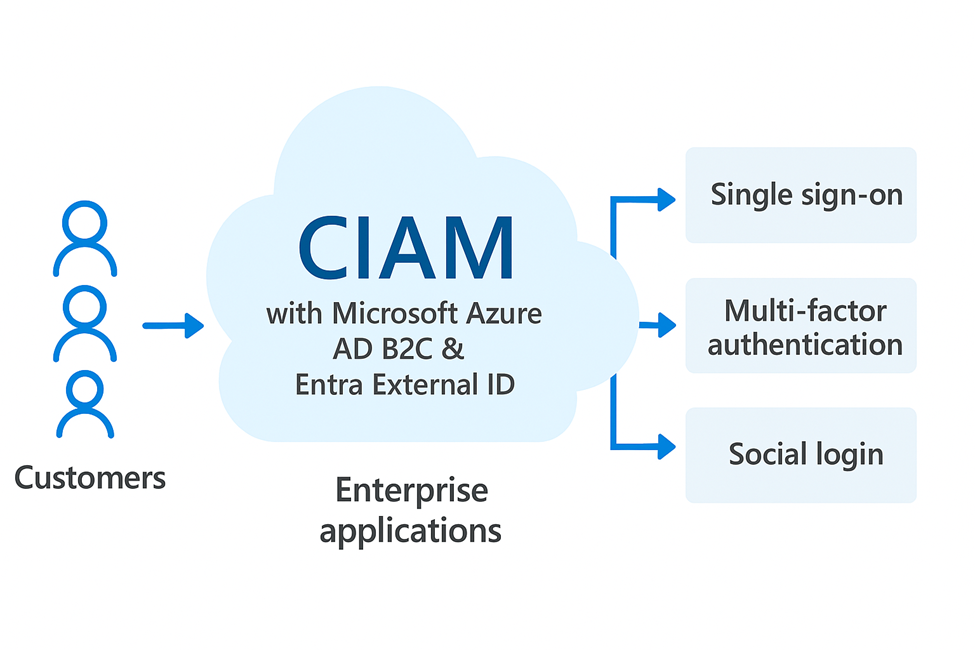
Azure AD B2C (Azure Active Directory B2C) is Microsoft's cloud-based customer identity and access management (CIAM) service. It authenticates customers, partners and citizens with username/password, social logins (Google, Facebook, Apple, LinkedIn), enterprise federation (SAML, OIDC) and multi-factor authentication, all on a dedicated B2C tenant that scales to hundreds of millions of users. Azure AD B2C is generally available and remains fully supported by Microsoft.
How much does Azure AD B2C cost?
Azure AD B2C is priced per monthly active user (MAU). The first 50,000 MAUs are free in Premium P1, after which you pay a per-MAU price plus a small per-authentication charge for MFA via SMS or voice. Pricing depends on region and edition (P1 vs P2 for advanced risk and identity protection). Schutz IT can model your projected Azure AD B2C bill against your active customer base.
What are Azure AD B2C custom policies?
Azure AD B2C custom policies (Identity Experience Framework, or IEF) are XML-based definitions for advanced sign-up, sign-in and profile-edit journeys beyond the built-in user flows. They support REST API calls to your own systems, claims transformation, age gating, progressive profiling and complex federation. Custom policies are powerful but have a steep learning curve — Schutz IT designs and maintains them for clients who need flows that user flows alone cannot deliver.
Azure AD B2C vs Microsoft Entra External ID — which should I choose?
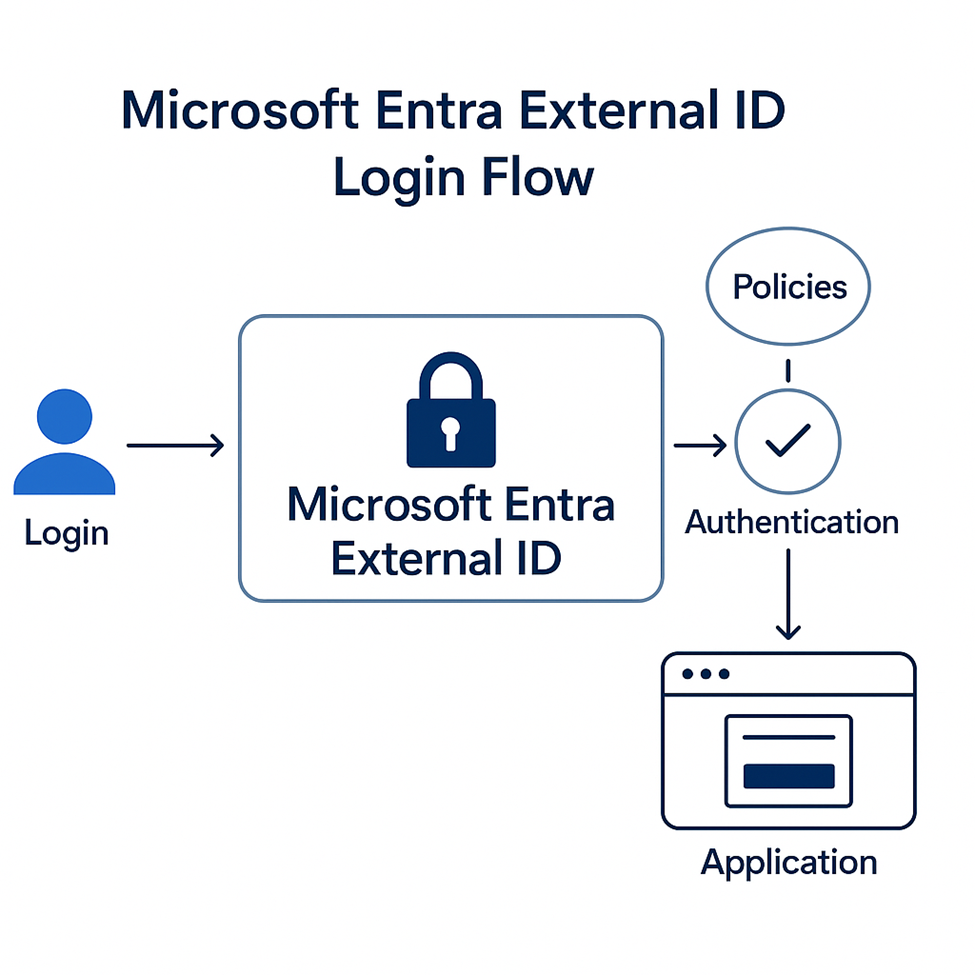
Microsoft Entra External ID is the next-generation evolution of Azure AD B2C. B2C uses a separate tenant and XML custom policies; Entra External ID lives inside your workforce Entra tenant, replaces XML with extensible user flows, and adds the full Conditional Access engine plus continuous access evaluation. New CIAM builds should usually default to Entra External ID. Existing Azure AD B2C tenants remain fully supported — there is no forced migration deadline.
How do I migrate from Azure AD B2C to Entra External ID?
An Azure AD B2C to Entra External ID migration runs in four phases: (1) inventory existing user flows, custom policies, identity providers and connected applications; (2) rebuild user journeys as Entra External ID user flows or extensions; (3) bulk-migrate user accounts (with credential re-hashing or just-in-time migration via REST APIs); (4) cut applications over one at a time using parallel issuers. Schutz IT delivers this so you keep both tenants live during the transition with no customer downtime.
Azure AD B2C vs Okta Customer Identity or Auth0 — which is better?
Azure AD B2C is usually the lowest-friction CIAM choice for organisations already standardised on Microsoft 365, Azure, Dynamics or the Power Platform — identities, billing and governance live in the same tenancy and per-MAU pricing is competitive at scale. Okta Customer Identity and Auth0 are strong alternatives when your stack is multi-cloud or when you need specific developer-experience features. Choose based on existing platform investments, regulatory requirements and the integrations on your roadmap.
How can Schutz IT help implement Azure AD B2C?
Schutz IT provides end-to-end Azure AD B2C implementation services — requirements analysis, B2C tenant setup, identity provider federation, branded user flows, custom policies, MFA and Conditional Access policy design, API and application integration, migration, security hardening, testing, deployment and ongoing managed support.
What should I evaluate when choosing a CIAM provider?
Weigh scale, security including MFA and passwordless access, compliance and data residency, standards support for OAuth 2.0, OIDC, SAML and SCIM, and ecosystem fit against your existing stack. Microsoft platforms suit Microsoft-centric organisations, while other CIAM tools may suit multi-cloud stacks.
Is Okta CIAM a good alternative to Azure AD B2C?
Okta Customer Identity is a strong CIAM platform, particularly for organisations running a multi-cloud stack or wanting specific developer-experience features. Schutz IT’s deepest implementation experience is in Azure AD B2C and Entra External ID; our CIAM strategy work can help evaluate which platform best fits your existing investments.
What is a CIAM strategy and why do I need one before implementation?
A CIAM strategy defines your identity data model, compliance requirements, migration approach and which user journeys need custom logic before any platform is configured. Skipping this step is a common reason CIAM implementations run over budget or need substantial rebuilding after launch.
What passwordless authentication methods does Schutz IT implement?
Schutz IT implements passkeys using WebAuthn and FIDO2, magic links and biometric sign-in within Azure AD B2C or Entra External ID, alongside MFA and conditional access policies.